Gambonanza
Stray Fawn StudioBoard
4.8291.00 Reviews
- Version
- 1.3.8
- Installs
- 50.00K
- Age Rating
- Everyone
Screenshots
Our Review of Gambonanza
 Analysis by Appyee
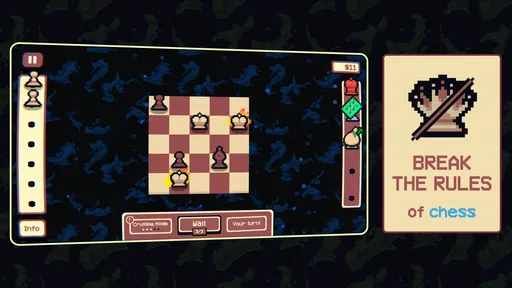
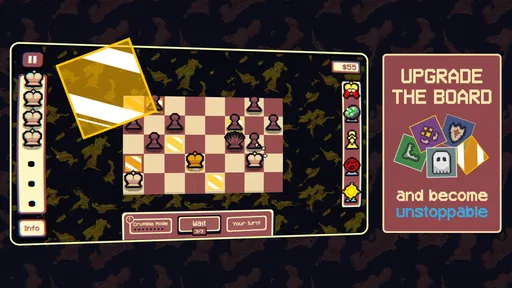
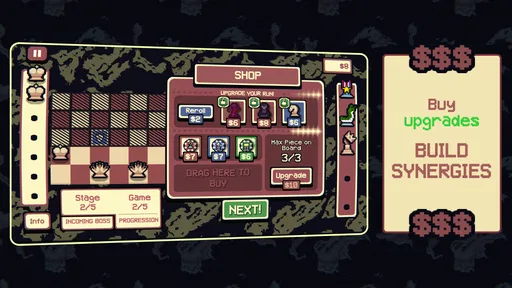
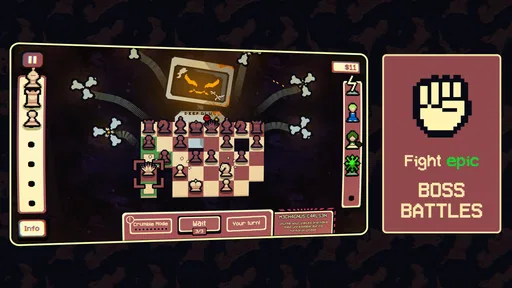
I expected a compact chess game when I first opened Gambonanza, but its small board quickly made me rethink how I value space, timing, and risk. This is a board game from Stray Fawn Studio that mixes chess-like decisions with roguelike unpredictability and unusual gambits. The result is not simply a faster version of traditional chess. It feels more like a series of tightly packed tactical puzzles where one careless move can change the entire shape of a run.
The basic appeal is easy to understand: familiar chess ideas are compressed into a smaller arena, then pushed in stranger directions. You still look for threats, protect important pieces, and try to create a winning sequence, but the surrounding rules encourage experimentation rather than perfectly rehearsed openings. I found that refreshing, especially when I wanted something thoughtful without committing to a full-length chess session.
Getting comfortable with the tiny board
The first thing I recommend is resisting the urge to play it exactly like ordinary chess. On a standard board, a move can be useful because it prepares something several turns away. Here, the limited space makes every square feel exposed. A piece that seems safely positioned may become a target almost immediately, while a move that looks reckless can open a route to a decisive attack.
That difference is the most important expectation for a first-time player. Gambonanza rewards reading the current position more than relying on a familiar opening routine. I spent my earliest attempts trying to build a neat formation, only to discover that the board was asking a more direct question: what can I threaten right now, and what will my opponent be able to punish?
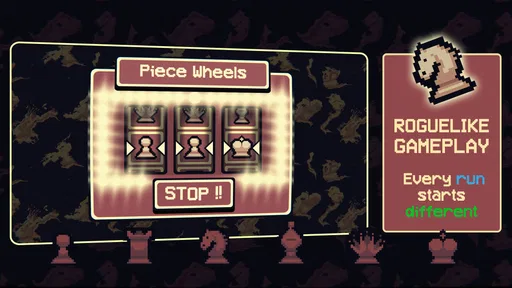
The roguelike structure also changes the emotional rhythm. A failed attempt does not feel identical to losing a conventional chess match, because the point is not only to reproduce a known line. Each run encourages you to test decisions, learn which gambits fit your style, and become more comfortable with uncertainty. That makes the game approachable for curious beginners, although players who want completely predictable competitive chess may find the surprises distracting.
The game is rated for Everyone, which makes it suitable for a broad audience in terms of content. That does not mean every player will find it easy. The difficulty comes from interpreting compact positions and understanding how unusual opportunities interact with ordinary chess instincts. Younger players who already enjoy strategy games may appreciate it, while someone looking for a purely casual board pastime may need a little patience at the start.
What to do after installing
My advice for the first session is simple: begin with the smallest goal possible. Do not try to understand every possible interaction before making a move. Instead, inspect the board, identify the pieces that can act immediately, and ask which opponent piece is currently creating the most pressure. This gives you a practical starting point without turning the opening into a study exercise.
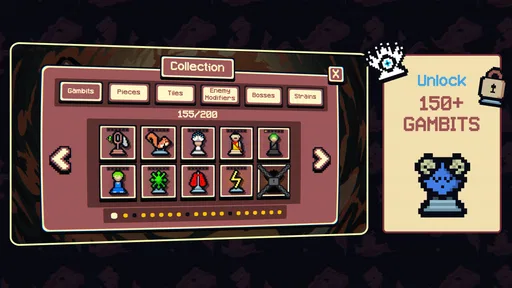
It is also worth taking a moment to read the wording around any available gambit before committing to it. The unusual options are where much of the personality lies, but they can tempt you into choosing a dramatic effect without considering the position that follows. I learned more from asking “what problem does this solve?” than from choosing the most spectacular-looking possibility.
For a first run, I would treat every move as information. Notice whether a gambit changes your mobility, creates a short tactical threat, or leaves a valuable piece awkwardly placed. Even when the attempt fails, that observation gives you something useful for the next try. This is a better approach than restarting immediately whenever the first plan goes wrong.
The current version is 1.3.8, and the game requires Android 6.0 or later. That makes it accessible on a wide range of Android devices, although the experience will still depend on how comfortable you are viewing a compact board on your particular screen. I prefer playing when I can focus on the position rather than rushing through taps, so a quiet setting helps more than any particular device specification.
Finding the first meaningful success
My first satisfying breakthrough came when I stopped measuring success by whether I could execute a clever attack. Instead, I looked for a move that improved two things at once: it reduced an immediate danger and created a new option for my next turn. On a tiny board, that kind of efficient move is often more valuable than a flashy sacrifice.
A useful beginner routine is to check three points before each important move. First, ask whether the move leaves your most active piece exposed. Second, look at the squares your opponent gains access to afterward. Third, decide whether your gambit supports a clear follow-up or merely changes the position without a plan. This takes only a few seconds once it becomes familiar, and it prevents many avoidable mistakes.
When I use this routine, I feel less dependent on luck. The game can still surprise me, but I am making decisions with a clearer view of the consequences. That balance is one of Gambonanza’s strongest qualities: it gives you unusual tools without removing the need to think carefully about when they are appropriate.
A realistic everyday use case is a short break between tasks. I can begin a run, make a handful of deliberate decisions, and stop once I reach a natural pause rather than needing to reserve a long uninterrupted block for a complete chess match. It works well for someone who enjoys strategy during a commute or lunch break, provided they are comfortable pausing their attention and returning to the position later.
That same structure may not suit everyone. If you prefer games where every session has a clearly fixed length, the run-based format may feel less tidy. Likewise, if your main goal is to improve at tournament chess, this is better treated as a tactical side activity than as a replacement for studying standard openings, endgames, or formal competitive play.
Why familiar chess habits can cause trouble
The most common confusion is assuming that a move is good because it would be good in ordinary chess. On a normal board, developing a piece or preserving a long-term structure can be sensible. On this smaller battlefield, the same habit may waste the moment you have available. A piece that needs several turns to become useful may never get that time.
I also had to stop treating every exchange as automatically favorable. With fewer spaces and fewer active pieces, removing one unit can alter the balance much more sharply than expected. Before trading, I now consider what the resulting empty square does for both sides. Sometimes the exchange is valuable because it opens a route; sometimes it simply removes my best defender.
Another point of friction is the temptation to spend a gambit just because it is available. A special option is not necessarily the correct option. I have had better results when I save an unusual move for a position where it changes a concrete calculation, such as interrupting an attack or forcing the opponent to respond in an awkward way. Used without a purpose, it can leave me with fewer useful choices later.
Beginners may also wonder whether they should focus on attacking the most important opposing piece immediately. My experience is that the answer depends on access. A threat matters only if the opponent has to respect it. If your attacking piece can be chased away or trapped, a quieter move that improves its escape route may be the stronger choice. The small board makes this distinction visible very quickly.
There is a learning curve, but it is a focused one. You do not need to memorize a huge amount before enjoying the game. You need to become comfortable comparing immediate pressure with future flexibility. Once that clicks, the board stops looking cramped and starts looking deliberately concentrated.
How I approach a second and third run
After the first meaningful success, I recommend changing only one habit at a time. For example, keep your opening approach but experiment with delaying gambits. On another run, try prioritizing mobility instead of material. This makes it easier to understand what actually improved your results, rather than attributing everything to a random sequence of events.
I find it helpful to remember the reason a run failed before starting again. Was the problem an exposed piece, an overlooked response, or a gambit used too early? Naming the mistake turns repetition into practice. Without that small pause, it is easy to replay the same idea with slightly different moves and learn very little.
One non-obvious strength is how well the compact board exposes inefficient thinking. In larger chess positions, a weak plan can remain hidden for several turns. Here, the consequences arrive sooner. That can be uncomfortable, but it is also useful: I can see whether my move created genuine pressure or merely looked active.
A second useful insight is that defensive moves are not necessarily passive. Because space is limited, protecting a key square can simultaneously restrict the opponent’s route and prepare your own counterplay. I began enjoying defensive turns more once I viewed them as a way to shape the next position rather than simply survive it.
A third trade-off concerns experimentation. Gambonanza makes trying unusual ideas enjoyable, but experimentation has a cost: you may sacrifice consistency while learning. Players who want the highest possible success rate from the beginning should use conservative moves until they understand the board, then introduce one gambit at a time. Players who value discovery more than immediate results can do the opposite and embrace the chaos early.
Who will enjoy it, and who should choose something else?
I would recommend this game to someone who likes chess but wants shorter, more concentrated decisions. It is also a good fit for board-game fans who enjoy adapting to changing situations instead of following a fixed script. The small board gives each action weight, while the roguelike layer encourages you to return after a failed attempt rather than considering the session wasted.
It is less suitable for a player seeking a traditional chess trainer. You will not get the same kind of experience as practicing against a standard engine, reviewing established openings, or playing a formal match with familiar rules. A conventional chess app is the better choice when accuracy, rating progression, and orthodox positions are the main priorities.
I would also hesitate to recommend it to someone who dislikes losing because of an unfamiliar interaction. The game asks you to learn through consequences. That can feel fair once you understand the logic, but the first few failures may seem abrupt if you expect every possibility to be immediately obvious.
The price is $5.99, so the decision depends on whether this specific blend appeals to you. In my view, it makes more sense for a person who expects to revisit the game and explore different approaches than for someone wanting a free, disposable distraction. The average rating is 4.8 from around 7.8 thousand ratings, and the game has passed 50 thousand installs, which suggests a strong reception among the audience it is targeting. I still would not use those figures as a substitute for knowing your own preferences: liking standard chess does not automatically mean liking this reinvention.
Practical expectations before you commit
One question a first-time user may have is whether chess knowledge is required. I do not think it is. Familiarity helps you recognize threats and piece value, but the reduced board and unusual gambits create their own language. A complete beginner can start by observing movement and consequences, while an experienced chess player may need to unlearn a few safe assumptions.
Another natural question is whether the game is good for quick sessions. In my experience, yes, especially when you define a session as testing a small idea rather than completing a grand plan. It is easy to pick up for a focused attempt, but the thinking can become deeper than the compact presentation suggests. I would not launch it when I only have time for mindless tapping.
Players may also wonder whether the randomness removes control. I did not find that it erased strategy. It changes the value of preparation: instead of preparing one exact sequence, I prepare flexible responses and avoid putting all my hopes into a single piece or tactic. That is the central adjustment, and it is why the game feels different from both ordinary chess and a purely random board game.
Finally, consider the screen and your attention. A tiny board is part of the design, not merely a space-saving choice. It concentrates the action, but it can also make a hurried glance costly. I play more comfortably when I slow down, inspect the whole position, and avoid making a move simply because it is available. That habit makes the experience clearer and reduces the feeling that the game is moving faster than I am.
My recommendation after spending time with it
Gambonanza succeeds because it understands that chess can be made exciting without becoming a completely different kind of game. Its compact positions create urgency, while the gambit system gives me reasons to experiment. I enjoy that a failed run can teach me something specific about timing, space, or overconfidence instead of merely telling me that I was outplayed.
The limitations are closely tied to its strengths. The small board can feel unforgiving, unusual choices can be confusing before they become familiar, and the experience is not a substitute for a standard chess platform. Some players will want clearer predictability or a more conventional learning path. Those are reasonable reasons to choose another board game.
For me, the best way into it is to begin cautiously, aim for one efficient move, and treat the first few runs as lessons rather than tests of talent. Once the board starts making sense, the game becomes surprisingly expressive. If you enjoy compact strategy where every square and every unusual opportunity matters, this is a thoughtful purchase rather than a novelty. Stray Fawn Studio has made something that rewards curiosity, but it also respects careful decision-making, which is exactly why I would recommend it to a friend who wants chess with a sharper, more unpredictable edge.
Verdict
Strengths of Gambonanza
- Simple interface makes the game easy to start playing.
- Quick rounds suit short gaming sessions.
- Bright graphics give the casino-style experience a lively feel.
- Multiple game options can add variety for regular players.
- Runs well on many modern Android and iOS devices.
Limitations of Gambonanza
- Results are based on chance, so consistent wins are not guaranteed.
- In-app purchases may encourage spending beyond the initial download.
- Some features may require an internet connection to work properly.
- Frequent play can become repetitive once the novelty wears off.
- Availability and features may vary by country or device.
Other Releases by Stray Fawn Studio
View All
Dungeon Clawler
Role Playing4.9
Similar Picks in This Category
View All
Ludo King®
Gametion4.1

Ludo
Yarsa Games4.6

Tile Master® - Matching Game
Higgs Studio3.6

Checkers Online
CC Games4.6

Dominoes
Loop Games4.7

Chess
Chess Prince4.6
Frequently Asked Questions
What is Gambonanza and how does it work?
Gambonanza is an online casino-style gaming platform focused on slot games and other chance-based entertainment. After creating an account, users can browse the available games, review the displayed rules and payouts, and play using the balance supported by the service. The exact game selection, payment options, and availability may vary depending on your country and the version of the app or website.
Is Gambonanza safe and legitimate to use?
Before downloading or registering, check whether Gambonanza is legally available in your region and identify the company operating the service. You should also review its licensing information, privacy policy, terms and conditions, and responsible-gaming tools. Use a strong password, enable any available account security options, and download only from an official source. Never provide payment details through unofficial links or modified app files.
Does Gambonanza use real money, and are there bonuses?
Gambonanza may offer real-money gaming, promotional credits, or bonus campaigns, but the conditions can differ by location, account type, and current promotion. Read the wagering requirements, eligible games, minimum deposits, expiry dates, withdrawal restrictions, and identity-verification rules before accepting an offer. A bonus is not free cash in practice if it includes conditions that make the balance difficult to withdraw.
Can I play Gambonanza for free or without making a deposit?
Whether Gambonanza provides a demo mode, free spins, or no-deposit access depends on the games and promotions currently available. If a free-play option exists, it may use virtual credits that cannot be withdrawn. Real-money play generally requires an eligible account and an accepted payment method. Check the app’s current terms carefully, especially if you are testing the platform before depositing funds.
What should I know about withdrawals, support, and responsible gaming?
Withdrawal processing can depend on verification, the chosen payment method, minimum and maximum limits, and any applicable fees. Gambonanza users should confirm these details before depositing money and keep records of transactions. If an issue occurs, use the official customer-support channels rather than third-party contacts. Set spending and time limits, avoid chasing losses, and stop playing if gambling begins to affect your finances or wellbeing.
Play our best games!


